Pharmacogenomics is the study of evaluating the pharmacological differences in a patient's drug response based on genetic variation. The development of pharmacogenomics is critical to the future and evolution of personalized medicine. During my limited, yet significant, clinical experiences I've seen a vast range of patient responses to identical medications with similar doses. Throughout my time on anesthesiology services, I recognized much of our pharmaceutical administrations were done by trial and error. In some cases, we needed to add more drug while in others we needed less drug to reach a clinical effect. Ideally, medical care would advance to the point where we can analyze an individual's genetics and determine how a patient would respond to a pharmaceutical, biologic, or medical device. Although it will take diligence, perseverance, and discipline for pharmacogenomics to reach its full potential, its applications have already been realized through biopharmaceutical development. The biopharmaceutical industry has been able to make therapeutics that effect specific genes, pathways, and targets. Consequently, I expect to see further therapeutic applications reach the patient market before diagnostic or predictive tools are developed.
TRANSLATIONAL MEDICINE
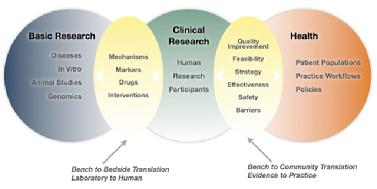
Translational medicine is the field of directly correlating the knowledge of basic research into clinical practice. The ultimate goal of translational medicine is to bring novel therapeutics and devices, based on detailed science, to patient care. This task of correlating scientific and clinical information is much easier said than done. Years of research are required to learn, process, develop, and maintain specific applications and technologies; however, the potential benefits may greatly be worth the significant investments. The success of translational medicine often depends on the medical discipline or specialty. For example, basic and clinical research in cardiology far surpasses the extent of knowledge in neurology. In as much, building direct translational applications in the field of cardiology are much more likely to be successful than in the field of neurology.